Georgia O'Keeffe & New Mexico: A Sense of Place
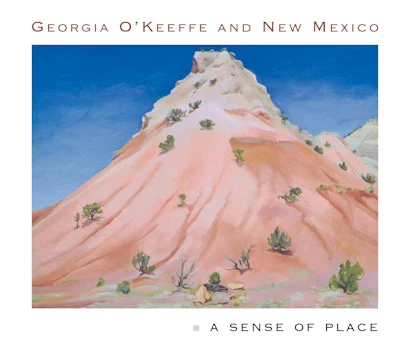
When Georgia O’Keeffe first visited New Mexico in 1917, she was instantly drawn to the stark beauty of its unusual architectural and landscape forms. In 1929, she began spending part of almost every year painting there, first in Taos, and subsequently in and around Alcalde, Abiquiu, and Ghost Ranch, with occasional excursions to remote sites she found particularly compelling. Georgia O’Keeffe and New Mexico is the first book to analyze the artist’s famous depictions of these Southwestern landscapes.
The book examines the magnificence of O’Keeffe’s work through essays by three noted authors. Barbara Buhler Lynes, Curator of the Georgia O’Keeffe Museum and organizer of the exhibition, discusses the relationship of the artist’s paintings to the places that inspired her.
Frederick Turner offers an illuminating essay contrasting O’Keeffe’s fabled aloofness from the well-established art colony in Santa Fe with her intense closeness to the local landscape she so fiercely loved. Lesley Poling-Kempes furnishes a fascinating chronicle of O’Keeffe’s years in the region as well as a useful explanation of the geological forces that produced the intense colors and dramatic shapes of the landscapes O’Keeffe painted.
Product Information
Product Information
Shipping & Returns
Shipping & Returns
Description
When Georgia O’Keeffe first visited New Mexico in 1917, she was instantly drawn to the stark beauty of its unusual architectural and landscape forms. In 1929, she began spending part of almost every year painting there, first in Taos, and subsequently in and around Alcalde, Abiquiu, and Ghost Ranch, with occasional excursions to remote sites she found particularly compelling. Georgia O’Keeffe and New Mexico is the first book to analyze the artist’s famous depictions of these Southwestern landscapes.
The book examines the magnificence of O’Keeffe’s work through essays by three noted authors. Barbara Buhler Lynes, Curator of the Georgia O’Keeffe Museum and organizer of the exhibition, discusses the relationship of the artist’s paintings to the places that inspired her.
Frederick Turner offers an illuminating essay contrasting O’Keeffe’s fabled aloofness from the well-established art colony in Santa Fe with her intense closeness to the local landscape she so fiercely loved. Lesley Poling-Kempes furnishes a fascinating chronicle of O’Keeffe’s years in the region as well as a useful explanation of the geological forces that produced the intense colors and dramatic shapes of the landscapes O’Keeffe painted.